What's inside!
- Understanding UX Design in Simple Terms
- What Does a UX Designer Do...
- Research: The Foundation of User Experience...
- Information Architecture: Organizing the Chaos
- Wireframes and Prototypes: Turning Ideas into...
- Collaboration: UX Is Never a Solo...
- Usability Testing: Learning from Real Users
- UX Designer Responsibilities vs UI Design
- Why UX Design Matters for Businesses
- The Growing Demand for UX Designers
- UX Design Services: A Strategic Investment
- Final Thoughts
- Ready to Elevate Your User Experience?
Share:


If you’ve ever clicked on an app or website and thought, “Wow, this just feels right,” you’ve already experienced the impact of great UX. Yet many people still ask the same question: What Does a UX Designer Do, really?
UX design often hides in plain sight. It’s subtle, intentional, and deeply human. A UX designer isn’t just someone who makes screens look neat they shape how users think, feel, and move through a digital product. Let’s unpack the real UX designer role, their responsibilities, and why UX design has become a non-negotiable part of modern digital success.
Understanding UX Design in Simple Terms
Before diving into job titles and tasks, let’s clarify UX design itself.
User experience design focuses on how people interact with a product. It asks questions like:
- Is this app easy to use?
- Can users find what they need without frustration?
- Does the experience feel smooth, intuitive, and even delightful?
UX design is the bridge between business goals and human behavior. It blends psychology, research, design thinking, and a touch of empathy. A good UX designer doesn’t guess—they observe, test, and refine.
What Does a UX Designer Do on a Daily Basis?
So, what does a UX designer do during an average workday? The answer is: a lot more than pushing pixels.
A UX designer wears many hats, shifting between strategy, research, and design. Their work ensures that users don’t just use a product they enjoy using it.
Here’s a closer look at their core activities.
Research: The Foundation of User Experience Design
Everything starts with understanding users.
One of the most important UX designer responsibilities is user research. This includes:
- Conducting user interviews
- Creating surveys and questionnaires
- Analyzing user behavior and patterns
- Studying competitors and market trends
This research phase helps UX designers uncover hidden pain points. Sometimes the issues users face aren’t obvious they’re buried beneath habits, assumptions, or poor workflows. UX designers dig those out like quiet detectives.
Without research, UX design becomes decoration. With research, it becomes purposeful.
Information Architecture: Organizing the Chaos
Once insights are gathered, UX designers structure information in a logical way. This is known as information architecture.
They decide:
- How content should be grouped
- What users see first
- How navigation flows from one screen to another
A well-planned structure reduces cognitive load. Users shouldn’t have to think hard to use a product. If they do, something has gone wrong.
This behind-the-scenes planning is a core part of the UX designer role, even though users never see it directly.
Wireframes and Prototypes: Turning Ideas into Reality
Next comes visualization.
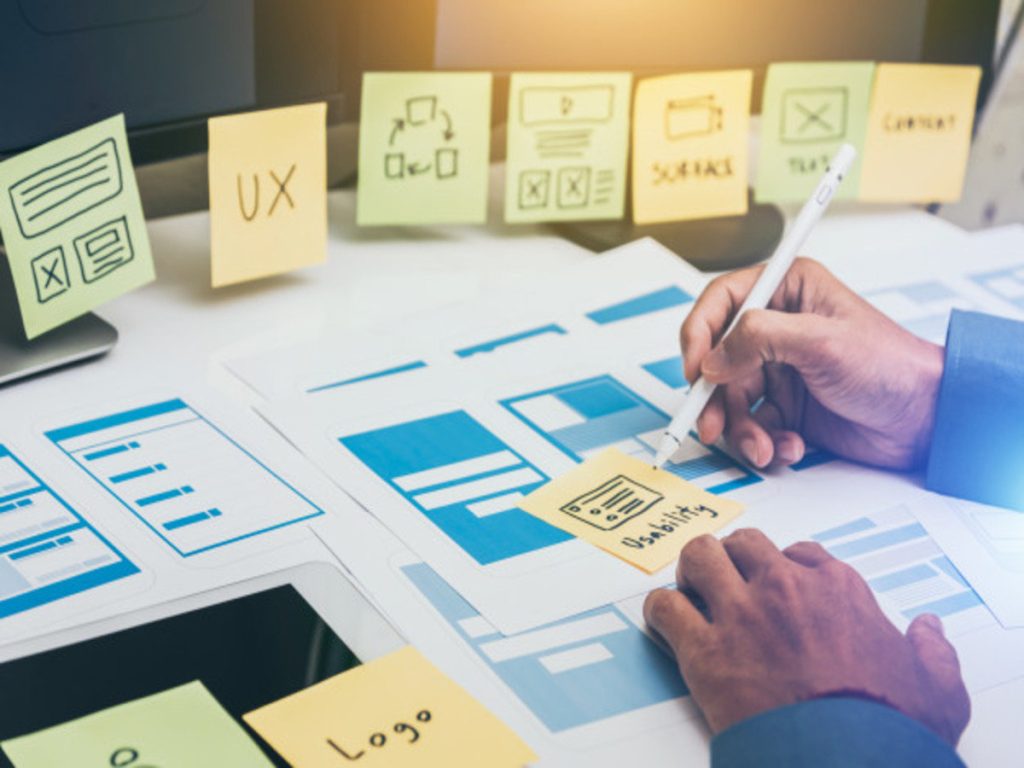
UX designers create wireframes simple, low-fidelity layouts that map out screens and interactions. These evolve into interactive prototypes that simulate how the product will work.
At this stage, UX design answers practical questions:
- Where should buttons go?
- How many steps does a user need to complete a task?
- What happens if something goes wrong?
Prototypes allow teams to test ideas early, saving time, money, and future frustration.
Collaboration: UX Is Never a Solo Act
A UX designer doesn’t work in isolation. Collaboration is a huge part of what does a UX designer do day to day.
They regularly work with:
- UI designers
- Developers
- Product managers
- Stakeholders
UX designers act as advocates for the user during discussions. When business goals clash with usability, the UX designer helps find a balanced solution one that serves both profit and people.
This collaborative rhythm ensures UX design aligns with real-world constraints.
Usability Testing: Learning from Real Users
Designing is only half the job. Testing is where truth emerges.
UX designers conduct usability testing to observe how real users interact with a product. They watch where users hesitate, click incorrectly, or abandon tasks altogether.
These sessions often reveal unexpected insights:
- A button that looks obvious but isn’t
- A flow that feels logical to designers but confusing to users
Based on feedback, UX designers iterate and improve. This loop of testing and refining is central to user experience design.
UX Designer Responsibilities vs UI Design
A common misconception is that UX and UI are the same. They’re closely related—but not identical.
- UX design focuses on how it works
- UI design focuses on how it looks
A UX designer is concerned with flow, logic, and usability. While visuals matter, their priority is experience, not decoration.
Understanding this distinction helps clarify what does a UX designer do beyond aesthetics.
Why UX Design Matters for Businesses
UX design isn’t just good for users it’s powerful for businesses too.
Strong UX design can:
- Increase conversion rates
- Reduce user churn
- Improve customer satisfaction
- Lower development costs over time
When users feel comfortable and confident, they stay longer and engage more. That’s why companies increasingly invest in professional UX Design Services.
In crowded digital markets, experience often becomes the deciding factor.
The Growing Demand for UX Designers
As digital products multiply, the demand for skilled UX designers continues to grow.
Companies now understand that poor UX equals lost revenue. As a result, the UX designer role has evolved from a “nice to have” into a strategic necessity.
From startups to enterprises, UX designers influence product success at every level.
UX Design Services: A Strategic Investment
Professional UX Design Services bring structure, insight, and clarity to digital products. They help businesses:
- Identify usability gaps
- Align design with user needs
- Build products people actually want to use
Instead of relying on assumptions, UX design relies on evidence, testing, and empathy. That’s what makes it so powerful and so valuable.
Final Thoughts
So, what does a UX designer do? UX design isn’t loud or flashy. It’s thoughtful, strategic, and quietly transformative. If you’re building a digital product and want users to stay, engage, and return UX design isn’t optional. It’s essential.
Ready to Elevate Your User Experience?
At Origami Studios, we craft thoughtful, research-driven UX design that transforms ideas into intuitive digital experiences. Whether you’re launching a new product or refining an existing one, our UX Design Services are built to put users first and results front and center.
👉 Let Origami Studios design experiences your users will love. Contact us today.